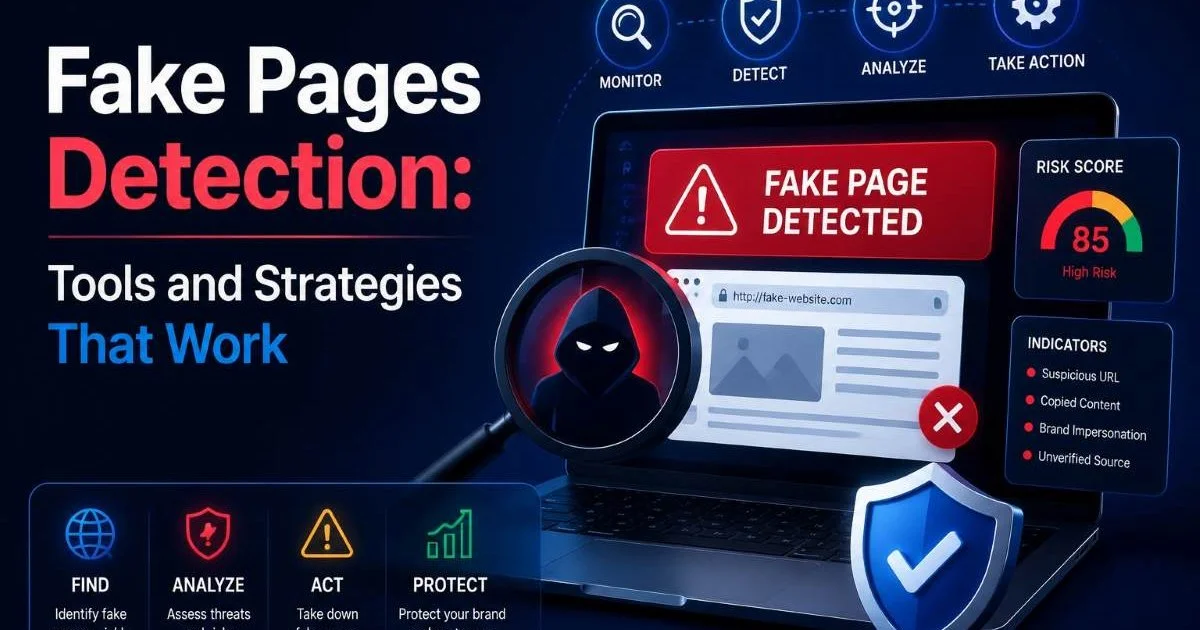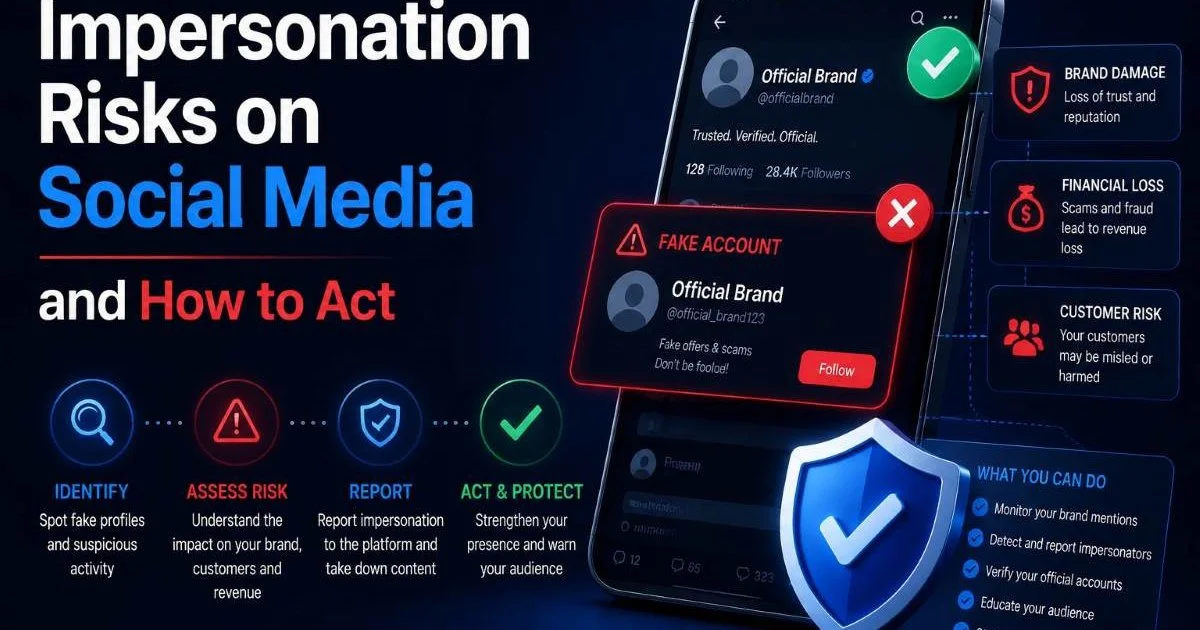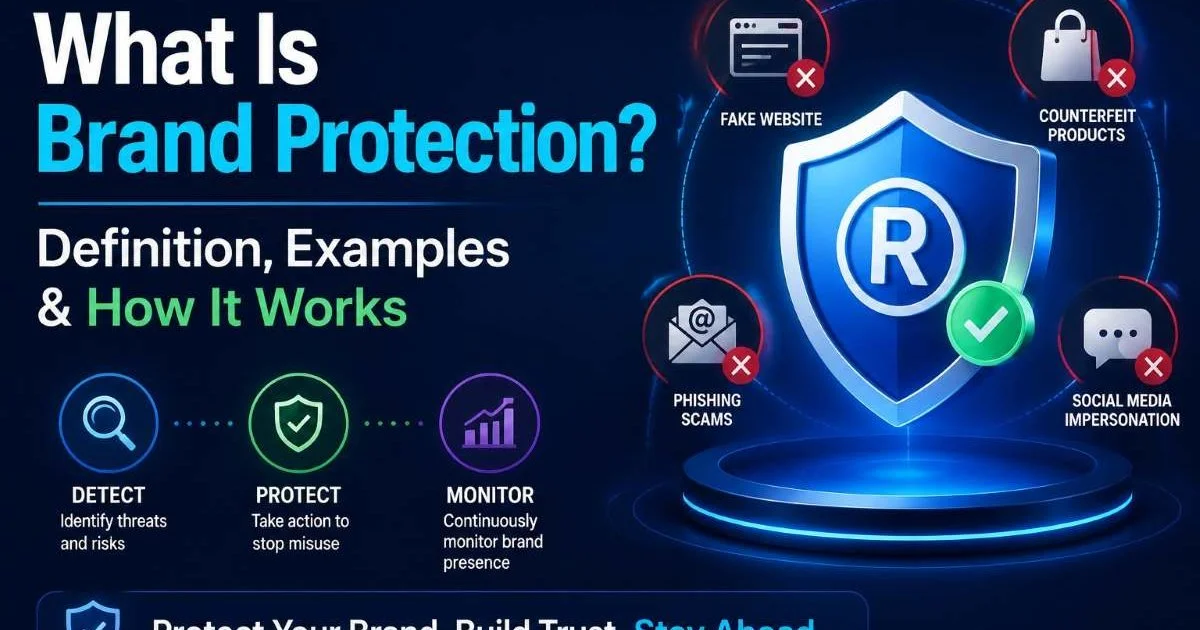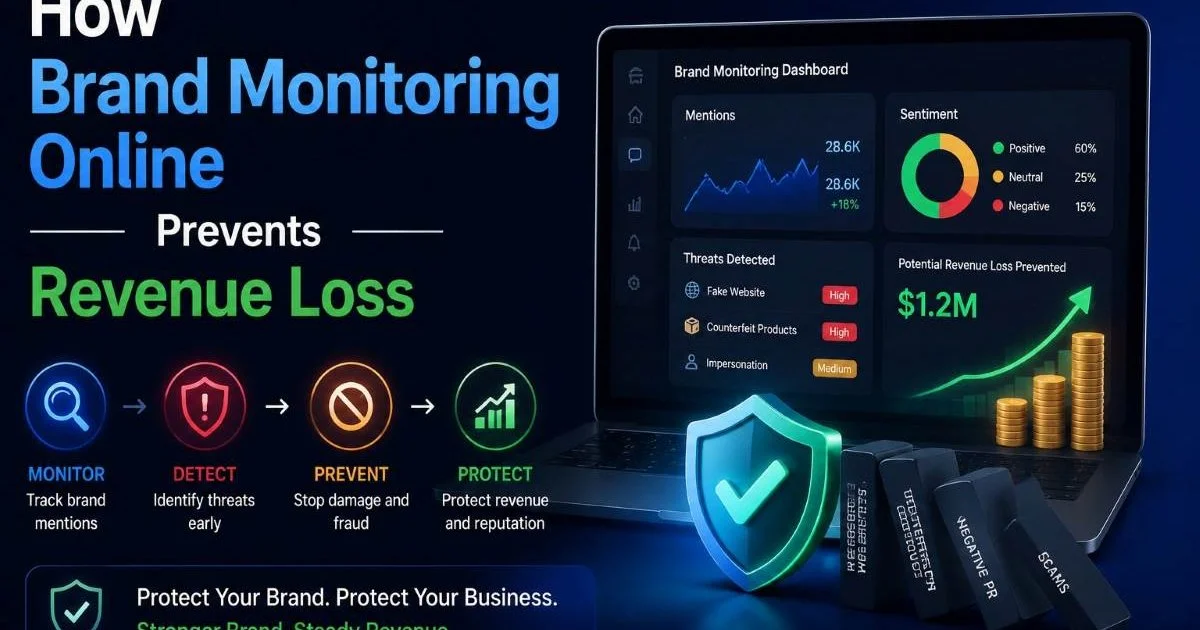
Brand monitoring online is no longer optional for businesses that want to protect their revenue streams. Every day, companies lose thousands of dollars to fake pages, unauthorized resellers, impersonation accounts, and domain squatters who exploit established brand names. The financial damage goes beyond direct sales losses; it erodes customer trust, inflates support costs, and creates long-term reputation damage that takes years to repair. For brand managers and business owners, understanding how online brand protection works is the first step toward building a resilient defense.
Detection of impersonation risks and fake pages has become a measurable business priority, not just a marketing concern. The good news is that a systematic approach to monitoring can stop most revenue leaks before they become catastrophic. As part of a broader brand protection strategy, online monitoring acts as your early warning system. This guide walks you through four practical steps to set up effective monitoring that directly prevents revenue loss.
Key Takeaways
- Fake pages and impersonation accounts cost businesses an estimated 1-5% of annual revenue.
- Automated brand monitoring tools detect threats faster than manual checks by a factor of ten.
- Domain abuse often precedes phishing attacks that directly steal customer payment information.
- Real-time alerts reduce average response time to brand threats from weeks to hours.
- Consistent monitoring data strengthens legal takedown requests and enforcement actions significantly.
Step 1: Map Your Brand Footprint and Identify Vulnerabilities
Catalog Your Digital Assets
Before you can monitor anything, you need a complete inventory of what you're protecting. This includes your primary domains, social media handles, product listings on marketplaces like Amazon and eBay, mobile apps, and any partner or affiliate sites that use your brand name. Most companies underestimate their digital surface area by 30 to 40 percent. A mid-size e-commerce brand might have 15 to 20 official touchpoints but discover 50 or more unauthorized references during an initial audit.
Start by listing every official domain and subdomain your company owns. Then document all social media profiles, including inactive ones on platforms you no longer use. Forgotten accounts on platforms like MySpace or Google Plus archives can be hijacked and repurposed. Include your trademark registrations, logo variations, and common misspellings of your brand name, because those are exactly what bad actors target first.
Identify Common Attack Vectors
Different industries face different impersonation risks. Financial services brands deal heavily with phishing domains, while consumer goods companies fight counterfeit product listings. Fashion and luxury brands see fake social media pages offering "exclusive deals" that funnel payments to scammers. Understanding your specific threat profile lets you allocate monitoring resources where they'll prevent the most revenue loss.
Map out the customer journey and identify where a fraudulent touchpoint could intercept a legitimate sale. If customers typically discover your products through Instagram, that platform deserves heavier monitoring. If most of your revenue comes through your website, domain abuse detection becomes the top priority. This targeted approach prevents the common mistake of spreading monitoring too thin across every possible channel.
Create a simple spreadsheet listing each digital asset, its platform, the responsible team member, and its last verification date.
Step 2: Deploy Automated Monitoring Across Key Channels
Choose the Right Monitoring Scope
Manual monitoring simply cannot keep pace with the volume of new domains, social profiles, and marketplace listings created daily. Automated tools scan thousands of data points per hour, flagging potential brand abuse in near real-time. The technology behind modern brand monitoring online platforms uses natural language processing, image recognition, and domain similarity algorithms to catch threats that a human reviewer would miss entirely.
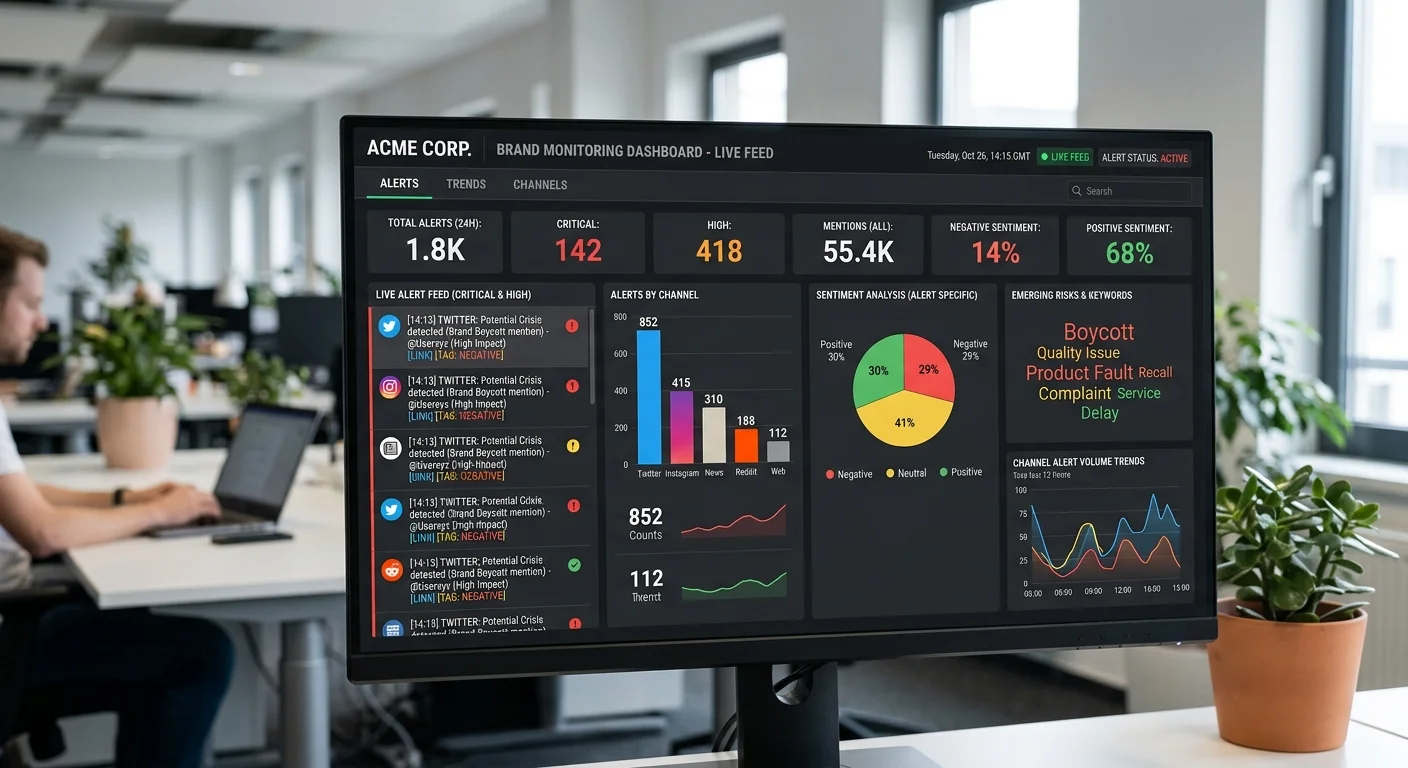
At minimum, your monitoring setup should cover four areas: domain registrations (including typosquatting variants), social media platforms, major e-commerce marketplaces, and web content that mentions your brand. Some advanced systems also monitor the dark web for stolen credentials and leaked customer data associated with your brand. AI-powered detection systems are becoming increasingly sophisticated; research into how AI self-monitoring works shows that these systems can even identify AI-generated fake content designed to mimic legitimate brands.
Set Alert Thresholds That Actually Work
The biggest operational mistake in brand monitoring is generating so many alerts that your team ignores them. Configure your system with tiered severity levels. A newly registered domain containing your exact brand name plus "sale" or "outlet" should trigger an immediate high-priority alert. A blog post mentioning your brand in a negative review, while worth tracking, doesn't need the same urgency. Setting smart thresholds keeps your team focused on genuine revenue threats.
Read Also: Website Security Scanning for Small Business Owners
Test your alert thresholds for two weeks before committing to them. During this calibration period, review every alert manually and adjust the sensitivity. You want a false positive rate below 20 percent for high-priority alerts. Anything higher means your team will start dismissing legitimate threats alongside the noise, which defeats the entire purpose of the system.
Never set monitoring to "alert on everything" mode. Alert fatigue is the number one reason brand monitoring programs fail within six months.
Step 3: Build Rapid Response Workflows for Detected Threats
Prioritize Threats by Revenue Impact
Not all brand threats are equal. A phishing site collecting customer credit card information under your brand name requires an emergency response within hours. A parody account on Twitter making jokes about your product is annoying but rarely impacts revenue directly. Build a classification matrix that maps each threat type to its estimated financial impact and assigns a corresponding response timeline. This prevents your team from wasting time on low-impact issues while serious threats fester.
| Threat Type | Revenue Impact | Response Window | Action Required |
|---|---|---|---|
| Phishing domain | High (direct theft) | Under 4 hours | Registrar abuse report, browser blocklist |
| Fake social media page | Medium (diverted sales) | Under 24 hours | Platform IP report, public warning |
| Counterfeit product listing | High (lost sales + trust) | Under 24 hours | Marketplace takedown request |
| Typosquatted domain | Medium (traffic diversion) | Under 48 hours | UDRP filing or purchase offer |
| Negative review manipulation | Low to medium | Under 1 week | Platform report, response strategy |
| Unauthorized reseller | Medium (margin erosion) | Under 1 week | Cease and desist letter |
Execute Takedowns Efficiently
Speed matters enormously in takedowns. A phishing page can collect hundreds of credentials in its first 48 hours. Have pre-drafted templates ready for each platform's reporting system. For domain abuse, prepare DMCA notices, registrar abuse complaints, and UDRP filings in advance. When a threat is detected, your team should be filling in specifics on a template, not starting from scratch. This cuts response time by 60 to 70 percent.
Document every takedown request with screenshots, timestamps, and evidence of brand infringement. This documentation serves two purposes: it strengthens current takedown requests, and it builds a legal evidence file for repeat offenders. Some platforms require multiple reports before acting, and having a documented history of abuse from the same actor accelerates their response. Keep records organized by threat type, platform, and resolution outcome for future reference.
"A fake brand page that stays live for just one week can intercept enough customer trust to cause months of reputation repair work."
Step 4: Measure ROI and Refine Your Monitoring Strategy
Track Financial Impact Metrics
Brand monitoring is an investment, and like any investment, it needs measurable returns. Track the number of threats detected, threats successfully resolved, estimated revenue protected, and time-to-resolution for each incident category. Most companies find that their monitoring investment pays for itself within the first quarter through prevented losses alone. One counterfeit product listing removal on Amazon, for example, can recover $5,000 to $50,000 in monthly diverted sales depending on the product category.
Calculate your cost-per-threat-resolved by dividing your total monitoring spend by the number of successful resolutions. Compare this against the estimated revenue each threat would have cost you if left unaddressed. For most brands, the ratio is dramatic; spending $500 to remove a fake page that would have diverted $20,000 in sales is a 40x return. Present these numbers to leadership quarterly to maintain budget support for your monitoring program.
Iterate Based on Data
Review your monitoring data monthly to spot patterns. Are most threats coming from a specific geographic region? That might justify enhanced monitoring in that market. Are fake pages spiking around product launches or seasonal sales? Time your monitoring intensity accordingly. Pattern recognition turns reactive brand protection into a proactive strategy that anticipates threats before they materialize.
Quarterly reviews should include input from legal, marketing, and customer service teams. Each department sees different brand threat signals.
Refine your keyword watch lists regularly. As your brand evolves with new products, campaigns, or slogans, your monitoring parameters need to evolve too. A product name that didn't exist six months ago could already be targeted by counterfeiters. Similarly, remove monitoring for discontinued products or retired campaigns to reduce noise. The goal is a continuously optimized system that catches what matters and filters what doesn't.
Set a calendar reminder every 90 days to audit and update your brand monitoring keywords, domains, and alert thresholds.
Final Thoughts
Protecting your revenue through brand monitoring online is a systematic process, not a one-time project. The four steps outlined here, mapping your footprint, deploying automation, building response workflows, and measuring results, form a cycle that strengthens your defenses over time. Fake pages detection and impersonation risk management become more effective as your data grows and your team's response patterns mature. The brands that invest in this discipline today will be the ones that maintain customer trust and market position tomorrow. Start with what you can control, measure what matters, and keep refining.
Disclaimer: Portions of this content may have been generated using AI tools to enhance clarity and brevity. While reviewed by a human, independent verification is encouraged.