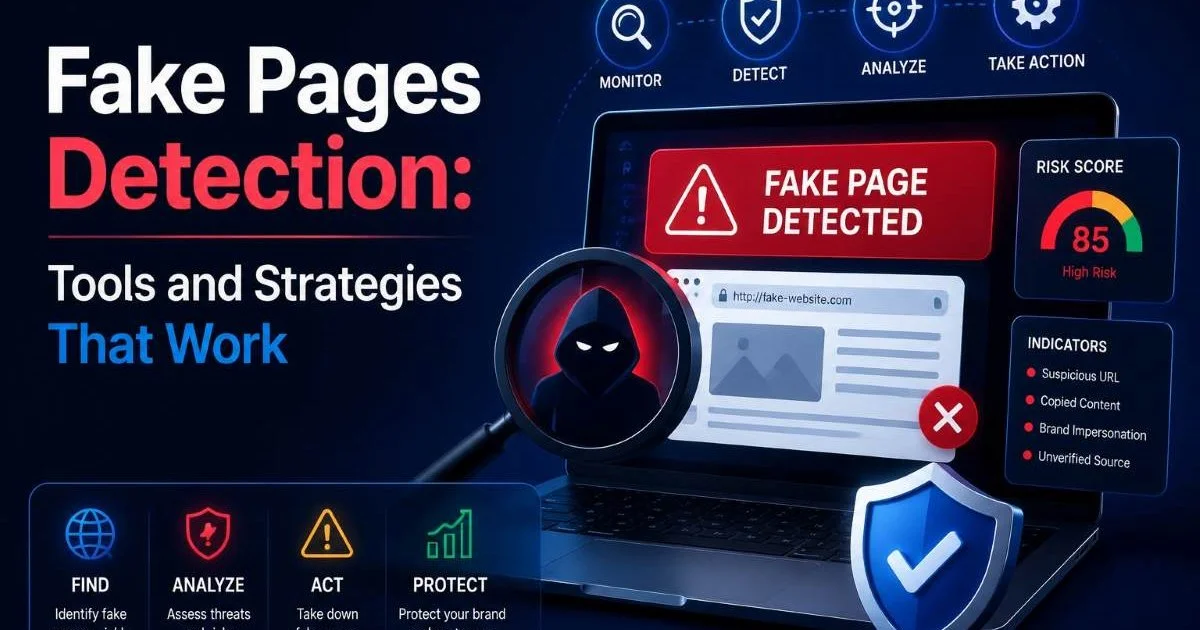
Fake pages detection: tools and strategies that work is no longer an optional concern for businesses with any meaningful online presence. Every day, bad actors create fraudulent pages mimicking legitimate brands to steal customer data, redirect traffic, or erode hard-won trust. The problem has grown significantly in recent years, with phishing sites alone increasing by over 150% annually according to the Anti-Phishing Working Group.
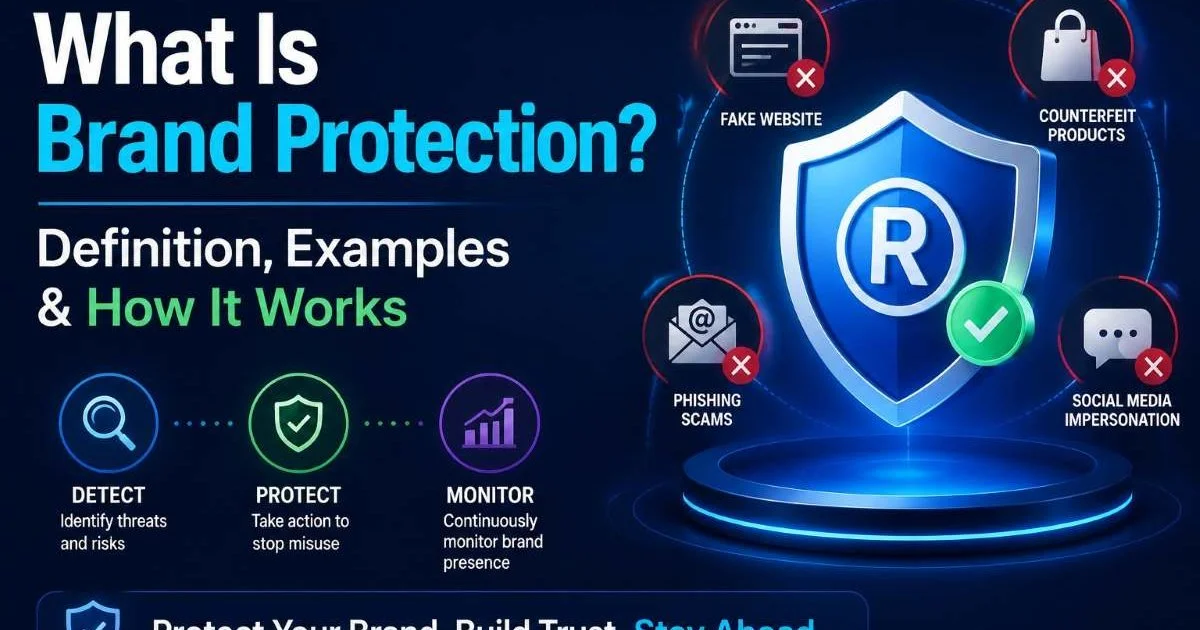
For brand managers and business owners, the consequences of ignoring fake pages range from lost revenue to lasting reputational damage. Understanding how brand protection works provides essential context for any detection effort. This guide walks you through the practical steps, tools, and strategies that actually produce results, so you can act before fake pages cause real harm to your brand.
Key Takeaways
- Automated monitoring tools catch fake pages faster than manual searches ever will.
- Domain monitoring should cover typosquatting, homograph attacks, and new registrations daily.
- Social media impersonation accounts often appear within hours of trending brand content.
- Combining AI-powered detection with human review produces the lowest false-positive rates.
- Swift takedown requests depend on having documented evidence collected in advance.
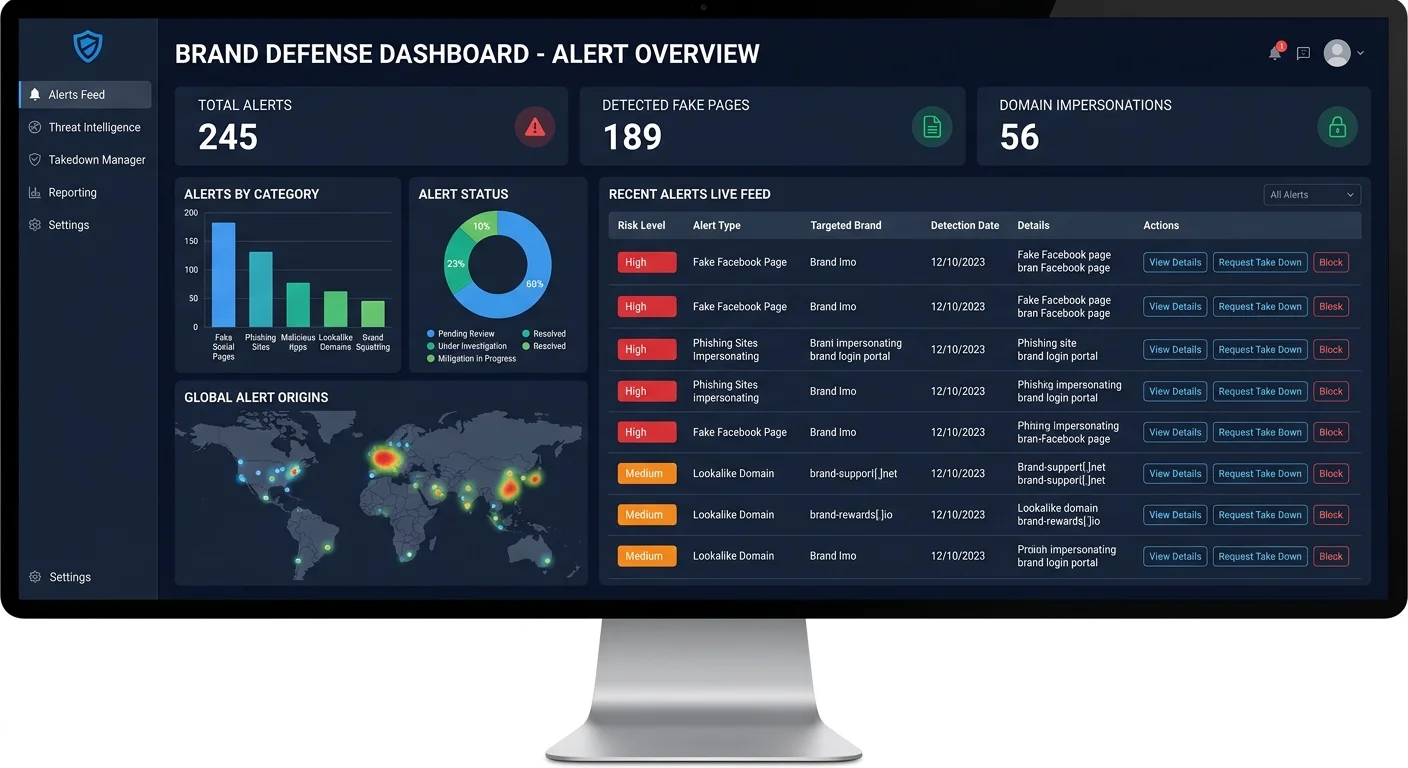
Step 1: Understand the Threat Landscape
Common Types of Fake Pages
Fake pages come in several distinct forms, and each one requires a different detection approach. Phishing sites replicate your login or checkout pages to harvest credentials. Counterfeit product pages use your branding to sell knockoff goods. Social media impersonation accounts copy your logo, name, and content style to mislead followers. Some fraudsters even create fake customer service pages to intercept complaints and extract personal information from frustrated customers.
Typosquatting remains one of the most common tactics, where attackers register domains like "yourrbrand.com" or "yourbrand-shop.com" to capture mistyped traffic. Homograph attacks use visually similar Unicode characters, replacing a Latin "a" with a Cyrillic "а" for instance, making the fake domain nearly indistinguishable from the real one. These techniques are cheap to execute and difficult for customers to spot without technical knowledge.
The sophistication of fake pages has increased dramatically. Modern phishing kits available on dark web marketplaces allow anyone to speed up a website in minutes. Some kits even include real-time proxying, where user inputs are forwarded to the real site simultaneously, making the fake page functionally identical during the interaction. This makes detection harder but also more important than ever.
Who Is Most at Risk
Brands with strong consumer recognition face the highest risk because attackers exploit established trust. E-commerce companies, financial services, SaaS platforms, and healthcare brands are prime targets. However, growing mid-market companies are increasingly vulnerable too, because they often lack dedicated security teams. If your brand is scaling, integrating detection into your IT strategy is a practical step toward protecting both revenue and reputation as your visibility increases.
Small and mid-sized brands are not immune. Attackers often target growing brands precisely because they assume defenses will be weaker.
Step 2: Set Up Automated Detection Tools for Fake Pages Detection
Domain Monitoring Platforms
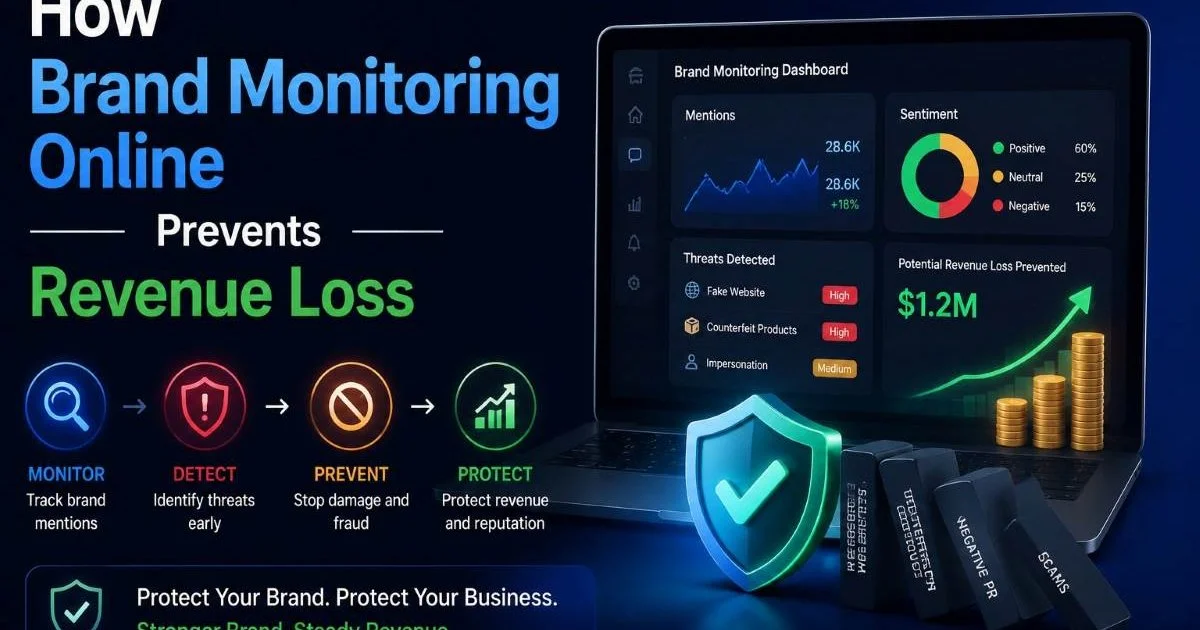
Manual Google searches will not catch fake pages at scale. You need automated tools that scan domain registrations, web content, and search engine results around the clock. Platforms like Brand Monitoring AI agents, DomainTools, and PhishLabs specialize in identifying newly registered domains that resemble your brand. These tools use fuzzy matching algorithms that catch typosquatting, character substitution, and keyword-based domain abuse within hours of registration.
When evaluating domain monitoring services, prioritize those offering WHOIS change alerts, SSL certificate transparency log monitoring, and integration with DNS intelligence feeds. Certificate transparency logs are particularly valuable because attackers must obtain SSL certificates for their fake sites, and these certificates are publicly logged. Monitoring these logs can alert you to a fake page before it even goes live. Set up daily alerts rather than weekly to minimize the window of exposure.
Configure your monitoring tool to track not just your exact brand name but common misspellings, abbreviations, and product names in domain registrations.
Social Media Scanning
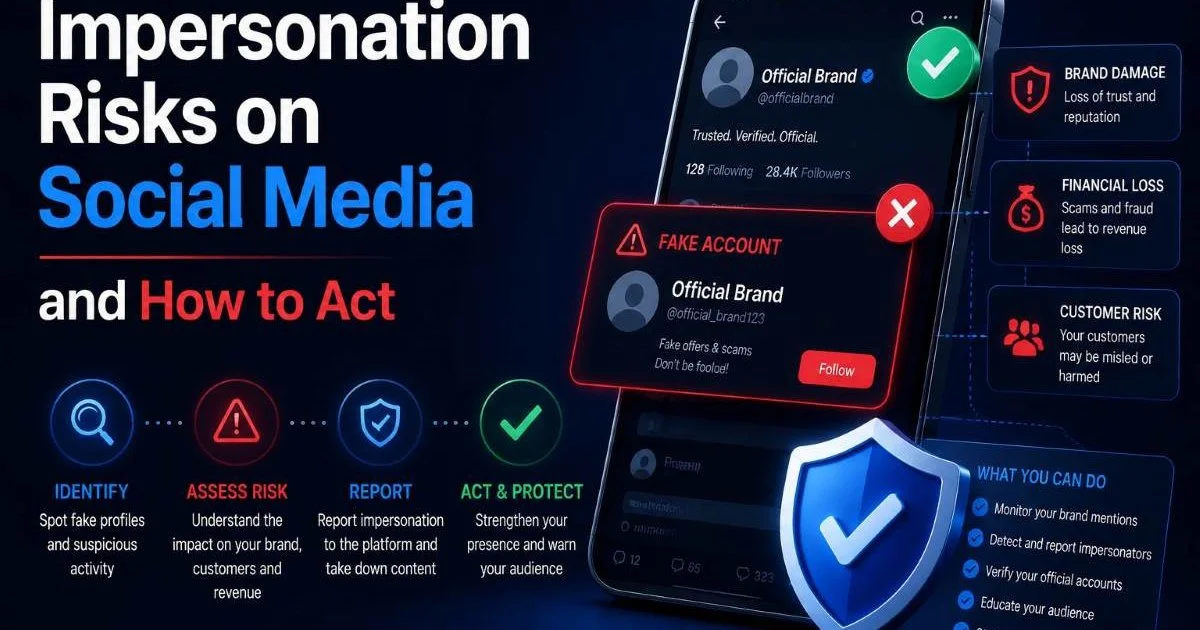
Social media platforms are fertile ground for impersonation. Tools like Brand24, Mention, and native platform reporting APIs can scan for accounts using your brand name, logo, or content. Facebook, Instagram, and LinkedIn each have different vulnerability profiles. Instagram and Facebook see the highest volume of fake brand pages, while LinkedIn impersonation typically targets individual executives for business email compromise schemes.
Effective social scanning goes beyond name matching. Image recognition technology can identify unauthorized use of your logo or product photography across platforms. Some monitoring services now use machine learning to detect accounts that mimic your posting style or tone. The combination of text-based and visual detection catches a wider net of impersonators than either method alone. Fake pages detection: tools and strategies that work must include this multi-modal approach to be comprehensive.
Step 3: Build a Response Workflow
Evidence Collection and Documentation
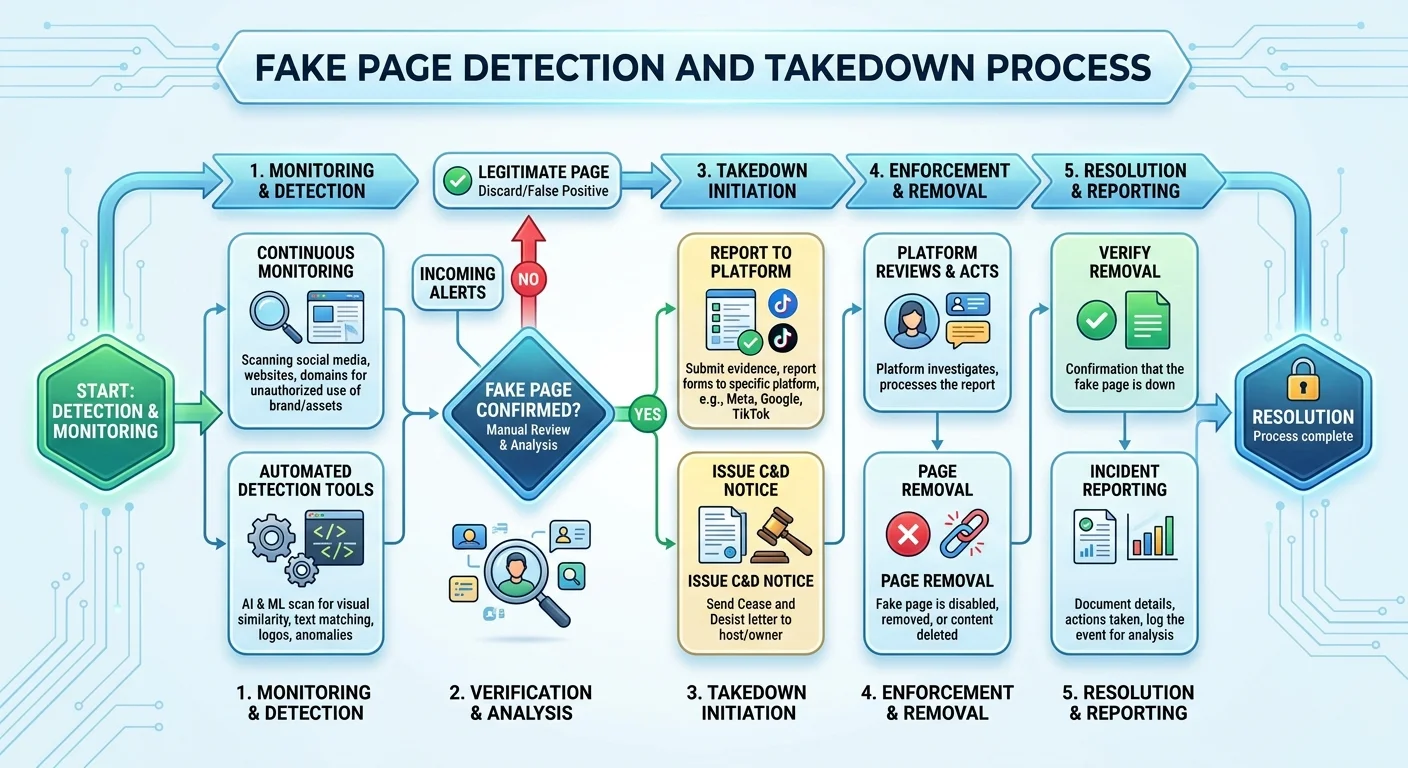
Detecting a fake page means nothing if you cannot act on it quickly. The first step in your response workflow should be evidence preservation. Take full-page screenshots with timestamps, save HTML source code, record WHOIS data, and capture any associated social media profiles or ads. Tools like the Wayback Machine, HTTrack, and browser-based screenshot extensions help create a verifiable record that hosting providers and legal teams will accept.
Organize your evidence in a standardized format that includes the fake URL, date of discovery, screenshots, WHOIS records, and a brief description of how the page infringes on your brand. This documentation becomes critical for DMCA takedown notices, UDRP domain disputes, and law enforcement referrals. Without clean evidence, takedown requests often stall or get rejected. Many companies maintain a shared spreadsheet or case management system specifically for tracking impersonation incidents from discovery through resolution.
Always preserve evidence before contacting the attacker or their hosting provider. Some fraudsters will take down pages temporarily to avoid action, then relaunch under a different domain.
Takedown Procedures
Most hosting providers and social media platforms have abuse reporting mechanisms, but the speed and effectiveness vary widely. For phishing sites, reporting through Google Safe Browsing, Microsoft SmartScreen, and the platform's own abuse desk simultaneously produces the fastest results. Domain registrars are obligated under ICANN policy to investigate abuse reports, though response times range from hours to weeks. Sending reports to multiple parties in parallel is the most effective approach.
"The difference between a brand that survives an impersonation attack and one that suffers real damage is almost always response speed."
For persistent or large-scale attacks, consider working with a specialized takedown service. Companies like Netcraft, Red Points, and MarkMonitor maintain relationships with registrars and hosting providers worldwide, often achieving takedowns in under 24 hours. These services cost money, but the ROI is clear when a single fake checkout page can compromise hundreds of customer accounts in a day. Your response workflow should define escalation thresholds: simple social media fakes may warrant a platform report, while active phishing sites demand immediate professional intervention.
| Channel | Best For | Typical Response Time | Success Rate |
|---|---|---|---|
| Platform Abuse Report | Social media fakes | 24 to 72 hours | Moderate |
| Google Safe Browsing | Phishing sites | Under 12 hours | High |
| Registrar Abuse Desk | Domain squatting | 48 hours to 2 weeks | Moderate |
| UDRP Filing | Domain disputes | 45 to 60 days | High (for clear cases) |
| Professional Takedown Service | Active phishing, large-scale abuse | Under 24 hours | Very High |
Step 4: Strengthen Long-Term Defenses
Employee and Customer Education
Technology alone cannot solve the problem. Your employees and customers serve as an early warning network when properly educated. Train customer-facing teams to recognize and escalate reports of suspicious pages. Create a simple reporting mechanism, such as a dedicated email address like security@yourbrand.com, where customers can forward suspicious links. Some brands add a "verify our official pages" section to their website footer, listing all legitimate social profiles and domains.
Regular internal training sessions should cover the latest impersonation tactics. Show real examples of fake pages targeting your brand or competitors. When employees understand what modern fakes look like, they become far more effective at spotting anomalies in customer communications, partner interactions, and online searches. Quarterly training updates are a reasonable cadence; the threat landscape shifts often enough that annual sessions become stale quickly. Fake pages detection: tools and strategies that work rely heavily on this human layer.
Add a verification page on your official website where customers can confirm legitimate domains, social accounts, and authorized resellers.
Proactive Brand Registration
Defensive domain registration is one of the most cost-effective long-term strategies. Register common misspellings, alternate TLDs (.net, .co, .shop, .store), and hyphenated variations of your brand name. The cost of a few dozen domain registrations per year is trivial compared to the cost of fighting an entrenched typosquatter. Similarly, claim your brand name on emerging social media platforms even if you do not plan to use them immediately; unused official accounts are better than leaving the name available for impersonators.
Consider implementing DMARC, DKIM, and SPF records for your email domains to prevent email spoofing that often accompanies fake page campaigns. These technical controls do not directly prevent fake web pages, but they close a common attack vector where phishing emails drive traffic to fraudulent sites. Trademark registration in key markets also strengthens your legal position during domain disputes and platform-level takedown requests. A proactive posture across domains, social platforms, and email authentication makes your brand a harder target overall.
Finally, build ongoing relationships with your registrar's abuse team and your key platform contacts. Having a named contact who understands your brand speeds up future takedown requests significantly. This relationship-building is an underappreciated aspect of fake pages detection: tools and strategies that work best when supported by strong operational partnerships with the platforms where abuse occurs.
Frequently Asked Questions
?How do I set up domain monitoring for typosquatting attacks?
?Is AI detection better than manual review for finding fake pages?
?How quickly can fake social media impersonation accounts appear?
?Does HTTPS on a site mean it's safe and not a phishing page?
Final Thoughts
Protecting your brand from fake pages requires a layered approach that combines automated monitoring tools, structured response workflows, and ongoing human vigilance. No single tool catches everything, but a well-designed system dramatically reduces your exposure.
Start with automated domain and social media monitoring, build clear evidence collection and takedown procedures, and invest in both employee education and defensive registrations. Fake pages detection: tools and strategies that work are not optional extras; they are fundamental to operating a trustworthy brand in an increasingly hostile digital environment.
Disclaimer: Portions of this content may have been generated using AI tools to enhance clarity and brevity. While reviewed by a human, independent verification is encouraged.