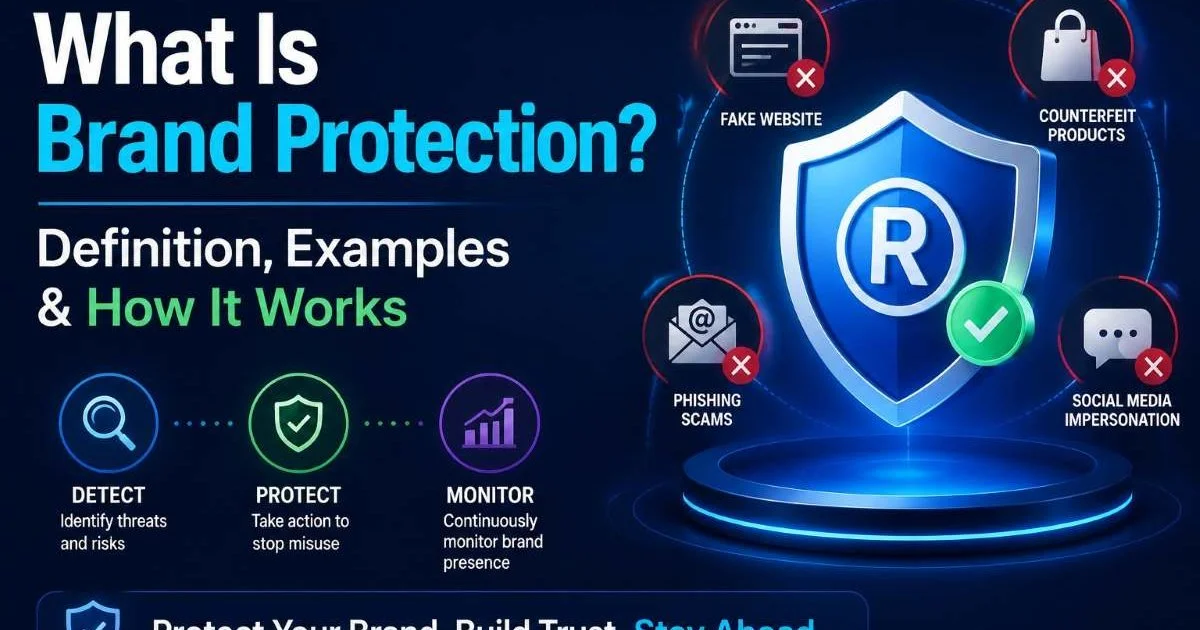
Brand monitoring online is the practice of tracking, analyzing, and responding to mentions of your brand across websites, social media, forums, marketplaces, and the broader internet to protect your reputation and intellectual property.
For brand managers and business owners, the digital landscape presents a growing number of threats that can erode customer trust in hours. Fake social media pages, lookalike domains, impersonation accounts, and misleading reviews are no longer rare occurrences; they are daily realities.
The companies that survive these threats are the ones actively watching for them. Brand monitoring online gives you the visibility to spot problems early, act fast, and maintain control over how your business is perceived. Without it, you are essentially flying blind in a space where competitors, scammers, and disgruntled actors can shape your narrative. This article breaks down what brand monitoring actually involves, how it works, why it matters, and where most people get it wrong.
Key Takeaways
- Brand monitoring online covers mentions, fake pages, domain abuse, and impersonation threats.
- Automated alerts let you respond to reputation threats within minutes, not days.
- Domain abuse monitoring catches lookalike domains before they reach your customers.
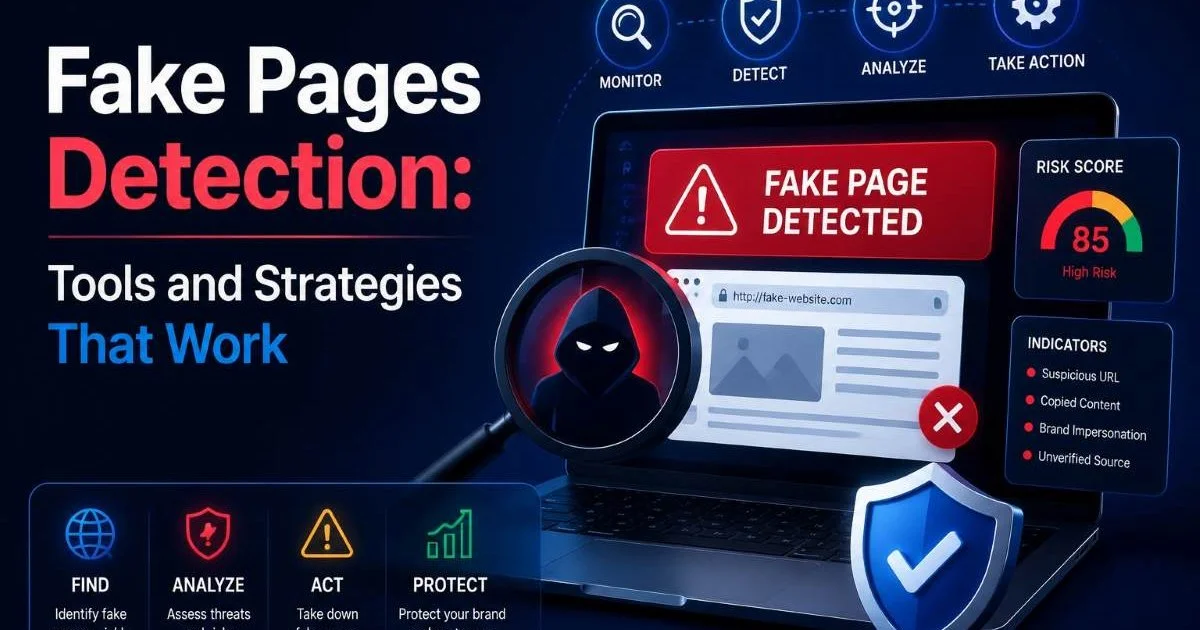
- Fake pages detection requires continuous scanning across social platforms and marketplaces.
- Proactive monitoring costs far less than reactive crisis management after damage is done.
How Brand Monitoring Online Works
Mention Tracking and Sentiment Analysis
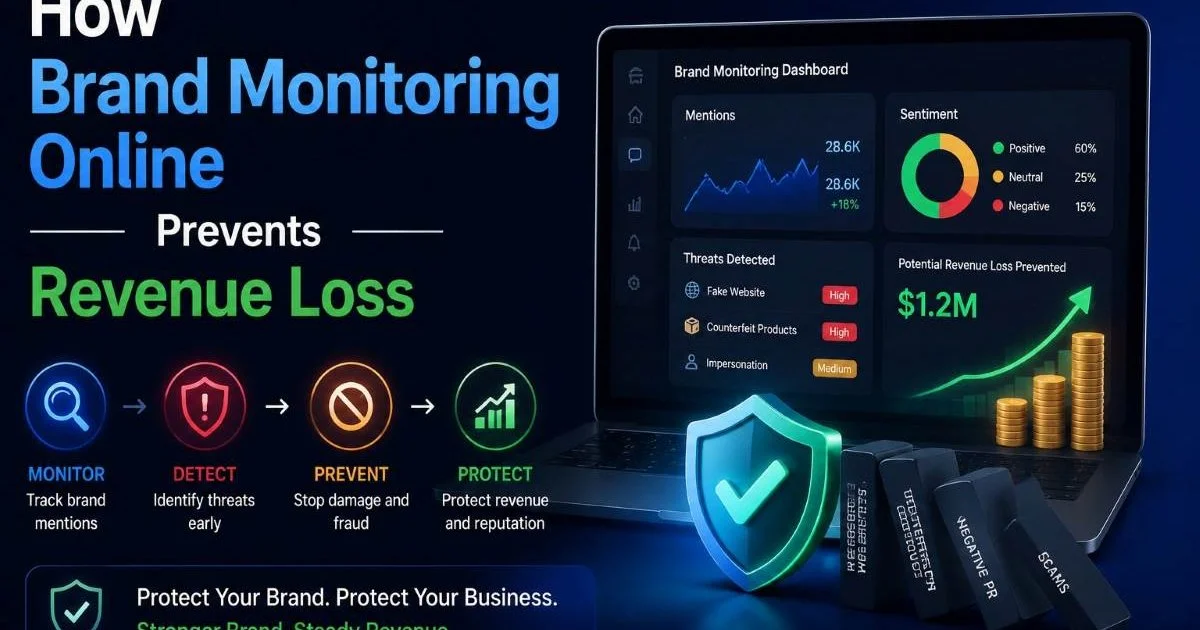
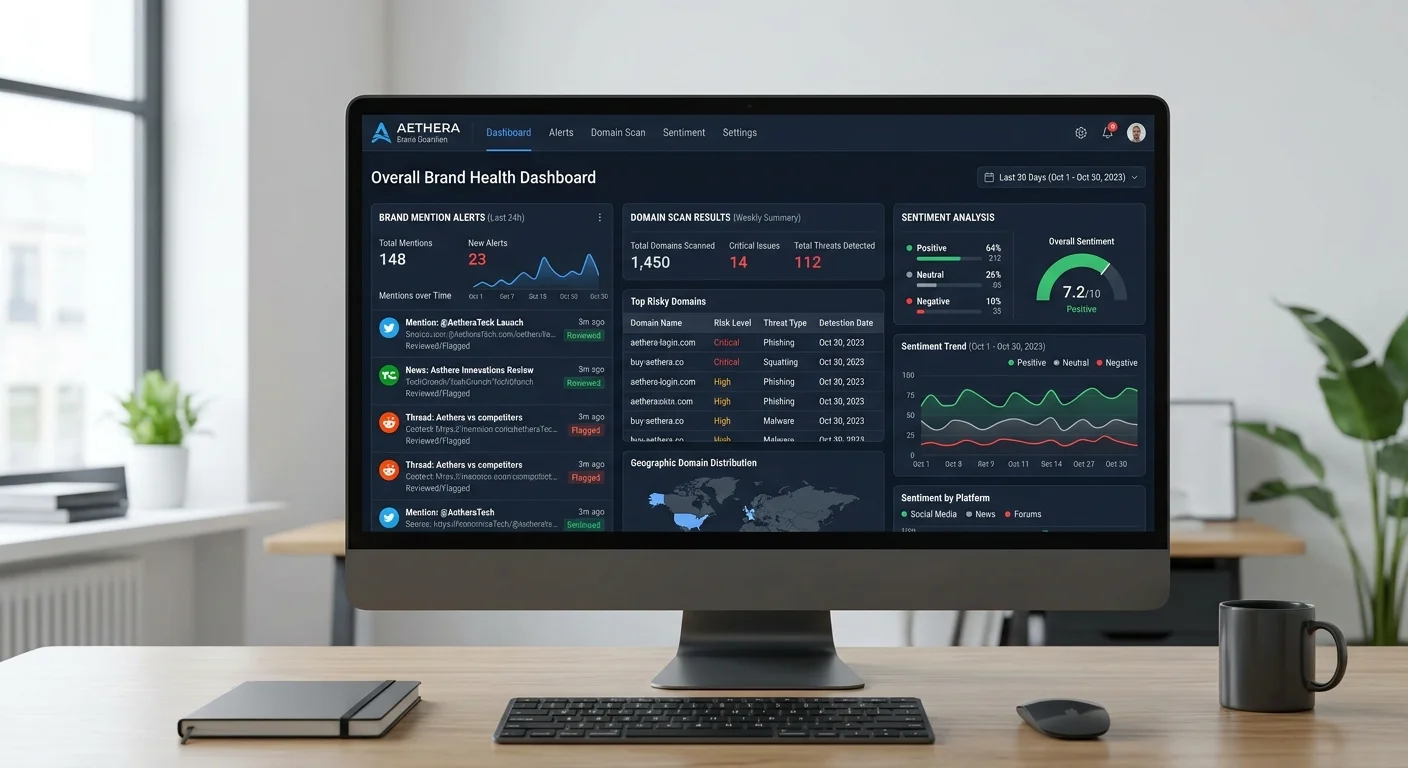
At its core, brand monitoring online relies on automated crawlers and APIs that scan the internet for specific keywords, brand names, product names, and executive names. These tools pull data from social media platforms, news sites, blogs, review portals, and forums. The raw mention data is then filtered through sentiment analysis algorithms that classify each mention as positive, negative, or neutral. This classification helps teams prioritize which mentions need immediate attention and which are simply organic conversation.
The frequency of scanning matters enormously. Some tools check once per day, while more sophisticated platforms offer near-real-time suspicious activity alerts that notify your team within minutes. For a brand facing an active impersonation campaign or a viral negative post, the difference between a five-minute response and a 24-hour delay can mean thousands of dollars in lost revenue. Most enterprise-grade platforms allow customizable alert thresholds, so you only get pinged when mention volume spikes or sentiment drops below a set level.
Structured dashboards aggregate this data into a single view. You can typically see mention volume trends over time, top sources of conversation, geographic breakdowns, and sentiment shifts. This centralized visibility is what separates professional brand monitoring online from simply Googling your company name once a week. The data becomes actionable intelligence rather than background noise. Teams can assign response tasks, track resolution progress, and measure the impact of their interventions over time.
Domain and Page Scanning
Beyond social mentions, brand monitoring systems scan domain registrations in real time. Domain abuse monitoring tools watch for newly registered domains that contain your brand name, common misspellings, or variations using different top-level domains. When someone registers "yourbrand-support.com" or "yourbrand.shop," you want to know about it immediately. Understanding what a business domain is and how attackers exploit domain structures gives you a critical advantage in spotting these threats early.
Fake pages detection works similarly but focuses on social media profiles, marketplace storefronts, and web pages that use your branding without authorization. Crawlers compare visual assets (logos, product images, color schemes) against your official assets to flag potential copies. Some platforms use image recognition AI to catch modified versions of your logo that a simple text search would miss. The combination of domain scanning and page detection forms a comprehensive shield around your digital identity.
Register common misspellings of your brand name as domains proactively to prevent squatters from exploiting them.
Why It Matters: Threats and Use Cases
Impersonation and Phishing Risks
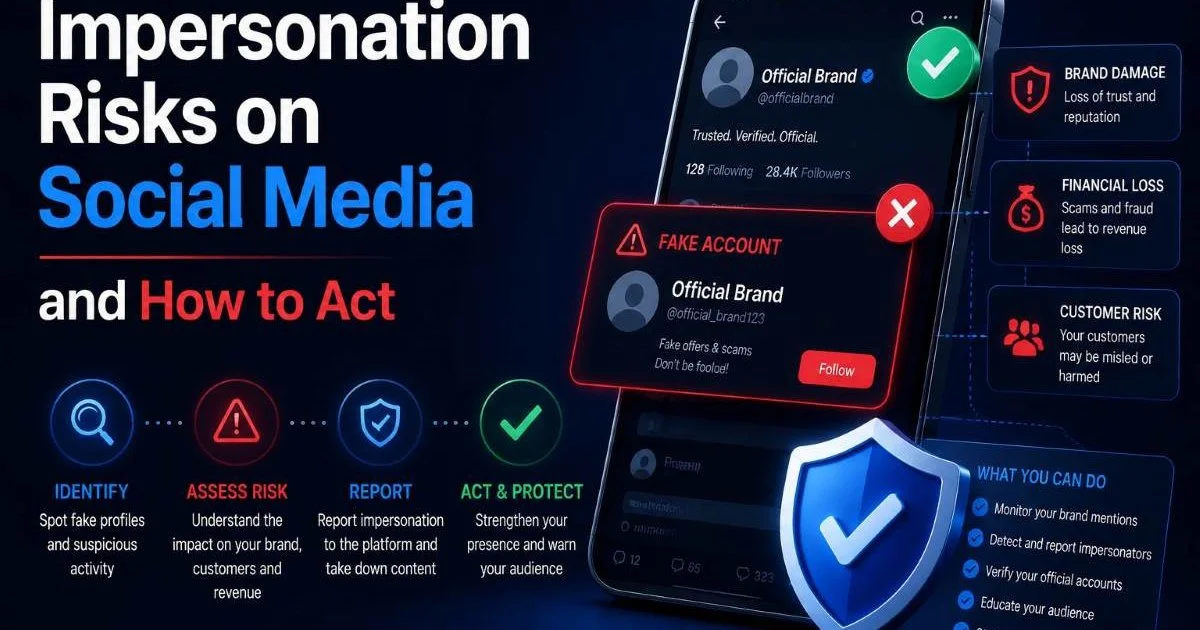
Brand impersonation protection is one of the most urgent reasons to invest in monitoring. Cybercriminals create fake social media accounts, fraudulent customer service pages, and phishing websites that mimic legitimate brands to steal credentials or money from unsuspecting customers. According to BlueVoyant's research on brand protection threats, impersonation attacks have accelerated sharply, with threat actors becoming more sophisticated in replicating brand assets. These attacks damage customer trust even when the victim company had nothing to do with the scam.
The operational use cases extend beyond security. Marketing teams use mention tracking to measure campaign performance and identify influencer conversations. Customer service teams use sentiment alerts to catch complaints before they escalate. Legal teams monitor for trademark violations across marketplaces. The same monitoring infrastructure serves multiple departments, making it a practical investment rather than a single-purpose expense. Each team pulls different insights from the same data stream.
Reputation and Revenue Impact
Online reputation management is directly tied to revenue. Studies consistently show that a single negative article on the first page of search results can reduce potential revenue by up to 22%. For e-commerce brands, fake product listings on third-party marketplaces siphon sales and expose customers to counterfeit goods. When customers receive a low-quality counterfeit and blame the original brand, the reputational damage compounds. Monitoring catches these listings early so legal or marketplace takedown processes can begin promptly.
"The brands that thrive online are not the ones that never face threats; they are the ones that detect and neutralize threats before customers notice."
Consider a mid-size consumer electronics brand that discovered 37 fake Facebook pages selling counterfeit products under its name. Without active monitoring, those pages had operated for months, collecting payments and delivering substandard goods. Once detected, the brand filed takedown requests and recovered control within two weeks. That scenario plays out across industries daily, from fashion to financial services. The cost of monitoring software pales in comparison to the legal fees, lost sales, and brand rehabilitation expenses that follow unchecked abuse.
Common Misconceptions About Brand Monitoring
The most persistent myth is that brand monitoring is only for large enterprises with global recognition. In reality, small and medium-sized businesses are disproportionately targeted because they lack the legal resources and security infrastructure to respond quickly. A local restaurant can have its name hijacked by a fake delivery page just as easily as a multinational corporation. The tools available today scale to fit budgets of all sizes, with some platforms offering free tiers that cover basic mention tracking and domain alerts.
Another misconception is that social media listening and brand monitoring are the same thing. Social listening focuses on understanding audience sentiment and market trends; brand monitoring online encompasses that but adds threat detection, including fake pages detection, domain squatting, trademark infringement, and phishing site identification. Treating them as interchangeable leads to blind spots. A social listening tool will catch a negative tweet but may completely miss a lookalike domain that is harvesting customer credentials through a fake login page.
Also Check: What Is AI Privacy Compliance? A Complete Guide
Do not assume that platform-native tools (like Facebook's brand rights protection) cover all threat vectors. They address only that single platform.
Some brand managers believe that a strong trademark registration alone protects them online. While trademarks provide legal standing for takedown requests, they do nothing proactively. You still need to discover the infringement before you can act on it. Monitoring bridges the gap between legal rights and practical enforcement. Without discovery, your trademark is a weapon sitting in a locked cabinet while threats operate freely across the internet.
Finally, there is a common assumption that once you set up monitoring, it runs on autopilot forever. The reality is that monitoring configurations need regular updates. You should add new product names, executive names, campaign hashtags, and keyword variations as your business evolves. Threat actors adapt their tactics constantly. A domain pattern that worked last quarter may not catch next quarter's attacks. Treating monitoring as a living system rather than a one-time setup is essential for sustained protection.
Review and update your monitored keywords quarterly, or whenever you launch new products, campaigns, or leadership changes.
Brand Monitoring vs. Related Concepts
Brand monitoring is frequently confused with several adjacent disciplines, including digital risk protection, competitive intelligence, and media monitoring. While they share overlapping techniques, their goals differ significantly. Digital risk protection (DRP) focuses specifically on cybersecurity threats like phishing, data leaks, and dark web exposure. Brand monitoring online is broader: it covers reputation, customer perception, and unauthorized use of your brand identity alongside security threats. Many modern platforms combine elements of both, but understanding the distinction helps you evaluate what you actually need.
Competitive intelligence is another related field that often gets bundled into monitoring discussions. While brand monitoring may surface competitor mentions organically, its primary purpose is protecting your own brand rather than analyzing rivals. Some tools do offer competitive benchmarking features, but bolting competitive analysis onto a brand protection platform can dilute focus. If your main concern is online reputation management and threat detection, prioritize tools built for that purpose. You can always layer competitive intelligence on top separately.
Media monitoring, traditionally used by PR teams, tracks earned media coverage across news outlets and publications. It predates digital brand monitoring and originally focused on print, radio, and television clips. Today, many media monitoring tools have expanded into social and web coverage, blurring the lines further. The key difference is that media monitoring rarely covers domain abuse monitoring or impersonation threats. It tells you what journalists and publishers are saying about your brand, but it will not flag a spoofed website or a fake Instagram page stealing customer data.
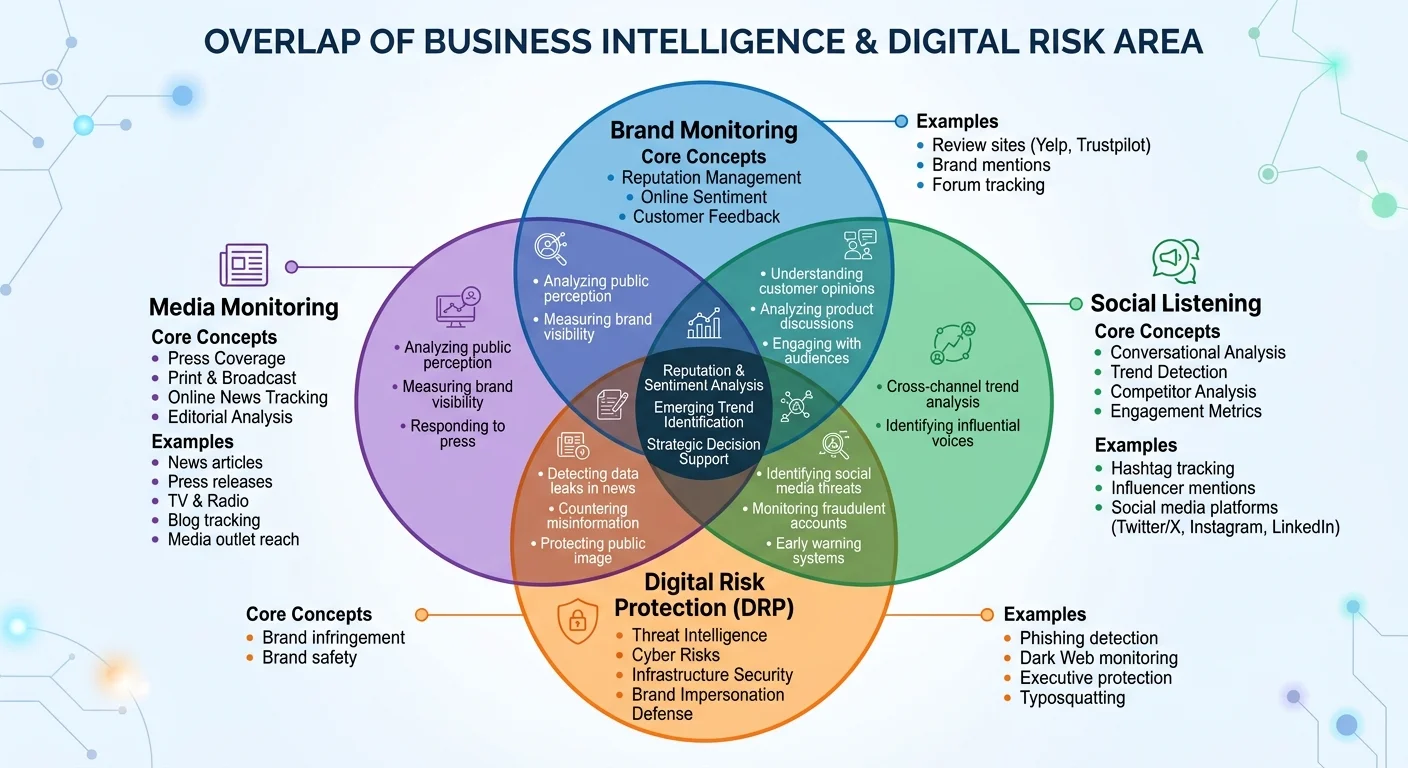
Choosing the right approach depends on your risk profile. A B2B software company with limited consumer exposure may focus on domain abuse and executive impersonation. A direct-to-consumer fashion brand might prioritize fake pages and counterfeit product listings. Financial services firms need heavy coverage of phishing sites and fake customer support accounts. Mapping your specific threat landscape to the appropriate monitoring categories prevents overspending on capabilities you do not need while ensuring no critical gap goes unaddressed.
Start by listing your top five brand assets (name, logo, domain, key products, executive names) and build your monitoring around those.
Frequently Asked Questions
?How do I set up alerts for lookalike domain abuse targeting my brand?
?Is brand monitoring online different from social media listening tools?
?How much does reactive crisis management cost compared to proactive monitoring?
?What's the biggest mistake brands make with online mention tracking?
Final Thoughts
Brand monitoring online is not optional for any business with a digital presence. It is the operational backbone of brand protection, reputation management, and customer trust. The threats are real, growing, and increasingly sophisticated, from fake pages to phishing domains to impersonation accounts.
Starting with the right tools, keeping your keyword lists current, and treating monitoring as an ongoing discipline rather than a checkbox will put you ahead of the vast majority of businesses that only react after the damage is done.
Disclaimer: Portions of this content may have been generated using AI tools to enhance clarity and brevity. While reviewed by a human, independent verification is encouraged.