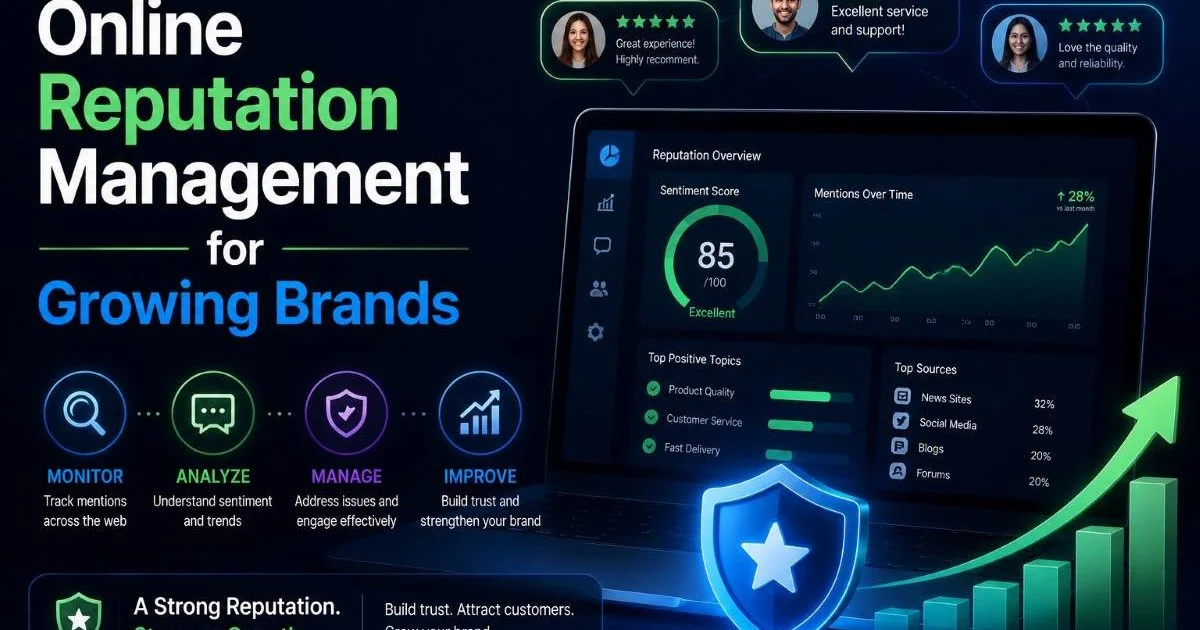
Online reputation management for growing brands has become a non-negotiable discipline in a digital landscape where a single negative mention can spiral into a full-blown crisis within hours. Whether you run a startup gaining traction or a mid-market company scaling fast, what people find when they search your brand name directly impacts revenue, partnerships, and customer trust. The stakes are high: 93% of consumers say online reviews influence their purchasing decisions, and brand impersonation schemes are more sophisticated than ever.
This guide walks you through a practical, step-by-step framework for protecting and improving your brand's digital reputation. You will learn how to monitor mentions, respond to threats, build positive sentiment, and measure results over time. If you are serious about growth, you cannot afford to leave your online reputation unmanaged. Every brand touchpoint, from search results to social media profiles, contributes to how the market perceives you.
Key Takeaways
- Audit your brand's current online presence before building any reputation strategy.
- Set up real-time monitoring to catch negative mentions and impersonation attempts quickly.
- Respond to criticism publicly with professionalism, not defensiveness or silence.
- Proactively publish high-quality content to dominate search results for your brand name.
- Measure reputation metrics monthly to track progress and adjust your approach.
Step 1: Audit Your Brand's Digital Footprint
Before you can manage your reputation, you need to know exactly where you stand. Start by searching your brand name on Google, Bing, and DuckDuckGo. Look at the first three pages of results, not just the first. Document every listing, review site, social media profile, and news mention that references your business. This baseline snapshot will reveal gaps, threats, and opportunities you did not know existed.
What to Look For in Your Audit
Pay close attention to unauthorized use of your brand name, including brand protection issues like fake social accounts, lookalike domains, or counterfeit product listings. These are red flags that your brand identity is being exploited. Check review platforms like Google Business Profile, Trustpilot, and Glassdoor for negative reviews that might be dragging down your average rating. Also verify that your official profiles appear above any unaffiliated or malicious pages in search results.
Create a spreadsheet to track every finding. Include columns for the platform, URL, sentiment (positive, neutral, negative), ownership status, and priority level. This document becomes your reputation map. Revisit it quarterly because the digital landscape shifts constantly, and new threats surface as your brand gains visibility. Growing brands are especially vulnerable because increased search volume attracts bad actors alongside legitimate customers.
Compare your findings against your competitors. If they dominate branded searches with owned media while your results include unaffiliated third-party pages, you have ground to make up. Understanding the competitive context helps you set realistic goals and allocate resources. This audit phase typically takes three to five days for a mid-sized brand, and it is time well spent.
Also Read: What Is Legacy Code Refactoring? A Complete Guide
Use incognito mode when searching your brand name to see unpersonalized results that reflect what customers actually find.
Step 2: Set Up Real-Time Brand Monitoring
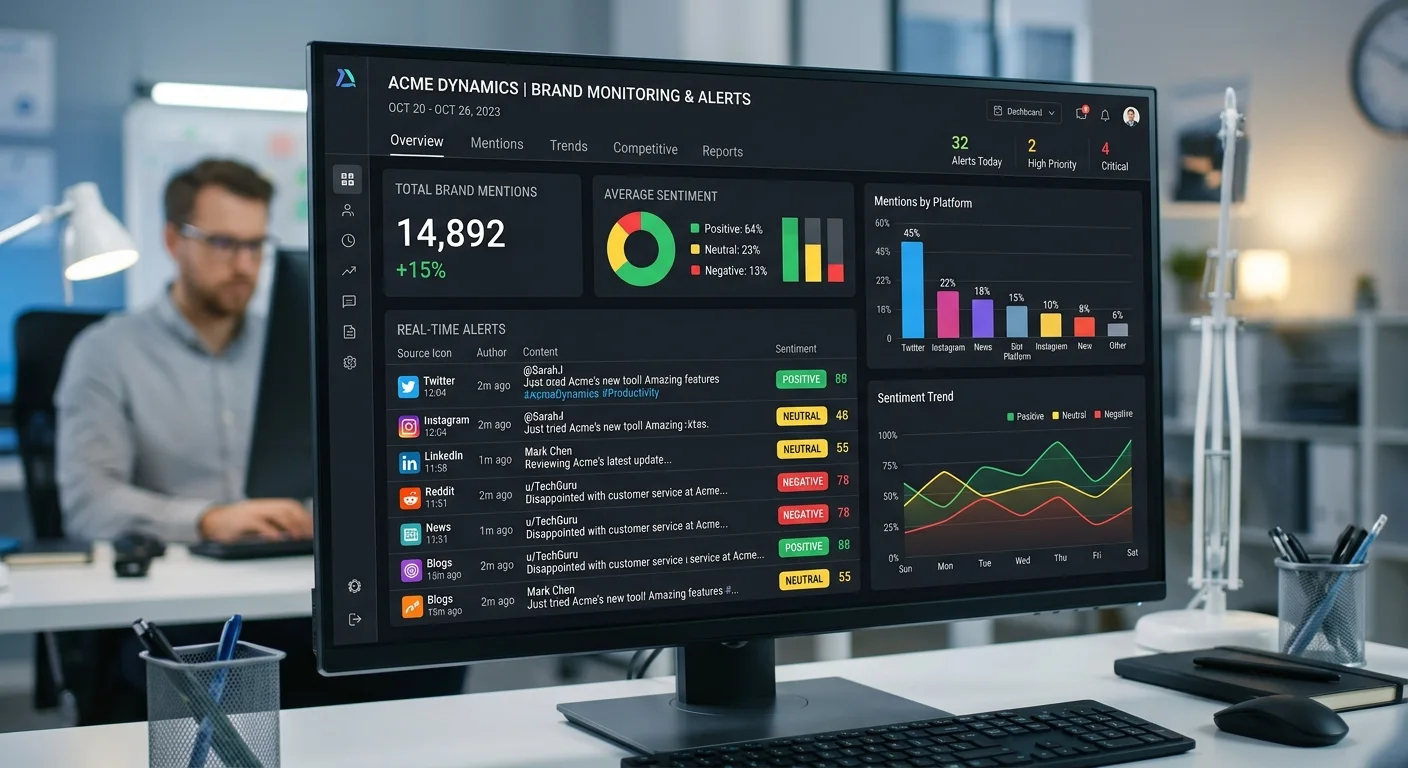
Online reputation management for growing brands requires ongoing vigilance, not a one-time audit. Real-time monitoring tools alert you the moment someone mentions your brand, posts a review, or creates a suspicious domain. The speed of your response often determines whether a minor issue stays minor or escalates into a public relations problem. Brands that respond to negative mentions within 24 hours see significantly better resolution outcomes than those that wait.
Choosing Monitoring Tools and Alerts
Several categories of tools serve different monitoring needs. Google Alerts is free and covers web mentions, but it misses social media and dark web activity. Dedicated platforms offer broader coverage, including social listening, domain monitoring, and fake page detection. Prioritize tools that track brand name variations, common misspellings, and executive names, since impersonators often target those angles. Investing in proper cybersecurity best practices alongside your monitoring setup will strengthen your overall defense posture.
Configure alerts for three tiers of urgency. Critical alerts (impersonation, data breaches, viral negative content) should trigger immediate notifications via SMS or Slack. High-priority alerts (negative reviews, press mentions) should arrive within the hour. Low-priority mentions (neutral brand references, industry discussions) can be batched into daily digests. This tiered system prevents alert fatigue while keeping you responsive to genuine threats.
Do not forget to monitor visual assets. Reverse image searches can reveal unauthorized use of your logo or product photos on counterfeit sites. Some monitoring platforms now include AI-powered image recognition that scans the web for logo misuse. As your brand grows, visual impersonation becomes just as dangerous as textual impersonation, particularly for e-commerce and consumer goods companies.
Free tools alone are insufficient for growing brands. Budget for at least one paid monitoring platform as your annual revenue crosses $500K.
Step 3: Respond to Threats and Negative Mentions
Monitoring is only useful if you act on what you find. A strong response framework separates brands that weather reputation crises from those that get buried by them. The key principle is straightforward: be fast, be honest, and be human. Template responses feel robotic and often backfire on social media, where audiences can spot insincerity instantly. Online reputation management for growing brands means developing a response muscle that can flex across different types of threats.
"A brand's reputation is not defined by the absence of problems but by the quality of its responses when problems arise."
Handling Fake Pages and Impersonation
When you discover a fake social media page or a lookalike domain, document everything with screenshots and timestamps before filing takedown requests. Each major platform has its own intellectual property reporting process. Facebook and Instagram use the Meta IP reporting tool; Google has a dedicated abuse form. For fraudulent domains, file a complaint with the registrar and consider a UDRP (Uniform Domain-Name Dispute-Resolution Policy) proceeding if the registrar does not act within 30 days.
Negative reviews require a different playbook. Respond publicly within 24 hours, acknowledge the customer's frustration, and offer to resolve the issue offline. Never argue in a public thread. If a review is clearly fraudulent or defamatory, flag it through the platform's dispute process, but do not rely solely on removal. Post a calm, factual response that gives other readers context. Prospective customers reading your reply will judge your professionalism more than the complaint itself.
For press-related reputation issues, prepare holding statements in advance for common scenarios: product failures, employee misconduct, data breaches, and service outages. Having pre-approved language saves precious hours during a crisis. Designate one spokesperson for each channel, whether that is your CEO for media inquiries or your community manager for social media. Consistency in voice prevents mixed messages that can deepen public confusion and erode trust.
Never ignore fake pages or impersonation attempts, even if they have low follower counts. Scammers use these to phish your real customers.
Step 4: Build and Amplify Positive Brand Signals
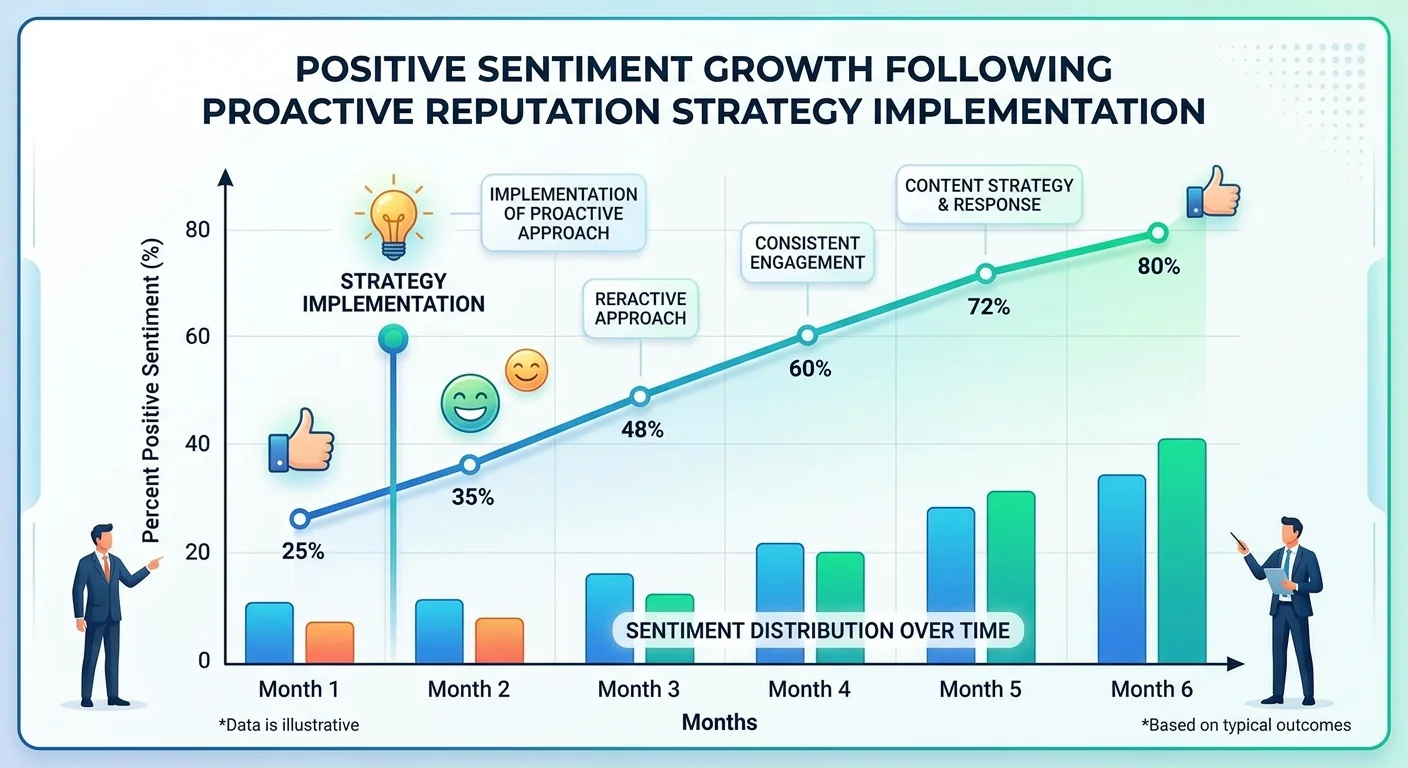
Defense alone will not build a strong reputation. You need to proactively fill the digital space with positive, authentic brand signals that push negative or irrelevant content down in search results. This is where online reputation management for growing brands transitions from reactive firefighting to strategic brand building. Think of it as owning the narrative before someone else writes it for you. The brands that dominate their own search results are the ones investing consistently in content creation and distribution.
Content Strategy for Reputation Control
Publish content on platforms you control: your company blog, LinkedIn company page, YouTube channel, and industry-specific forums. Each piece of content that ranks for your brand name is a result you own. Case studies, customer testimonials, thought leadership articles, and press releases all contribute to a robust search presence. Aim to publish at least two to three brand-related pieces per month, optimized for your brand name as a keyword, to maintain fresh signals.
Encourage satisfied customers to leave reviews on the platforms that matter most for your industry. For B2B companies, that usually means G2, Capterra, and LinkedIn. For B2C, Google Business Profile and Trustpilot carry the most weight. Make the process easy by sending post-purchase emails with direct links to your review profiles. A steady stream of positive reviews does more for your reputation than any single marketing campaign.
Invest in earned media opportunities. Guest articles on reputable industry publications, podcast appearances, and speaking engagements at conferences all generate positive backlinks and branded mentions. These third-party endorsements carry more weight with both search engines and human readers than self-published content. Online reputation management for growing brands is ultimately about building a library of positive, credible references that reflect the company you actually are.
Create a "Brand Newsroom" page on your website with press kits, approved logos, and official statements to give journalists accurate information.
Frequently Asked Questions
?How do I build a reputation map from my brand audit?
?Are paid ORM tools worth it over free Google Alerts?
?How long does a brand reputation audit actually take?
?Is ignoring negative reviews safer than responding publicly?
Final Thoughts
Managing your brand's online reputation is not a project with a finish line. It is an ongoing discipline that scales alongside your business. Start with a thorough audit, set up real-time monitoring, build a response framework for threats, and invest steadily in positive content.
The brands that thrive are the ones that treat reputation management as a core business function, not an afterthought triggered by crisis. Your next customer is searching for you right now; make sure they like what they find.